
Shelby County Probate Docket
Probate in Shelby County is a docket or case type within the Shelby County trial-court system. It is not a separate probate court with its own courthouse or independent clerk. The research identifies the Shelby Circuit Court and Shelby Superior Courts as the local trial courts, with the Shelby County Clerk serving as the filing and record office for court files. Probate cases may appear under one of those court names in Indiana MyCase, which is why searchers should avoid looking for a generic county "probate court" label.
Probate case types include decedents' estates, wills offered for administration, guardianships, trusts, and miscellaneous probate matters. The Shelby County Clerk's fee schedule specifically names adoption, estates, trusts, guardianships, and miscellaneous civil matters as a filing-fee group. A probate file may include a petition, will, notice, appointment order, inventory, creditor claims, accountings, orders, and a final report or closing order. Some entries are simple docket events. Other items may be linked as public documents only when court access rules allow display.
The Indiana probate code is the state law source captured for estate administration and probate procedure.
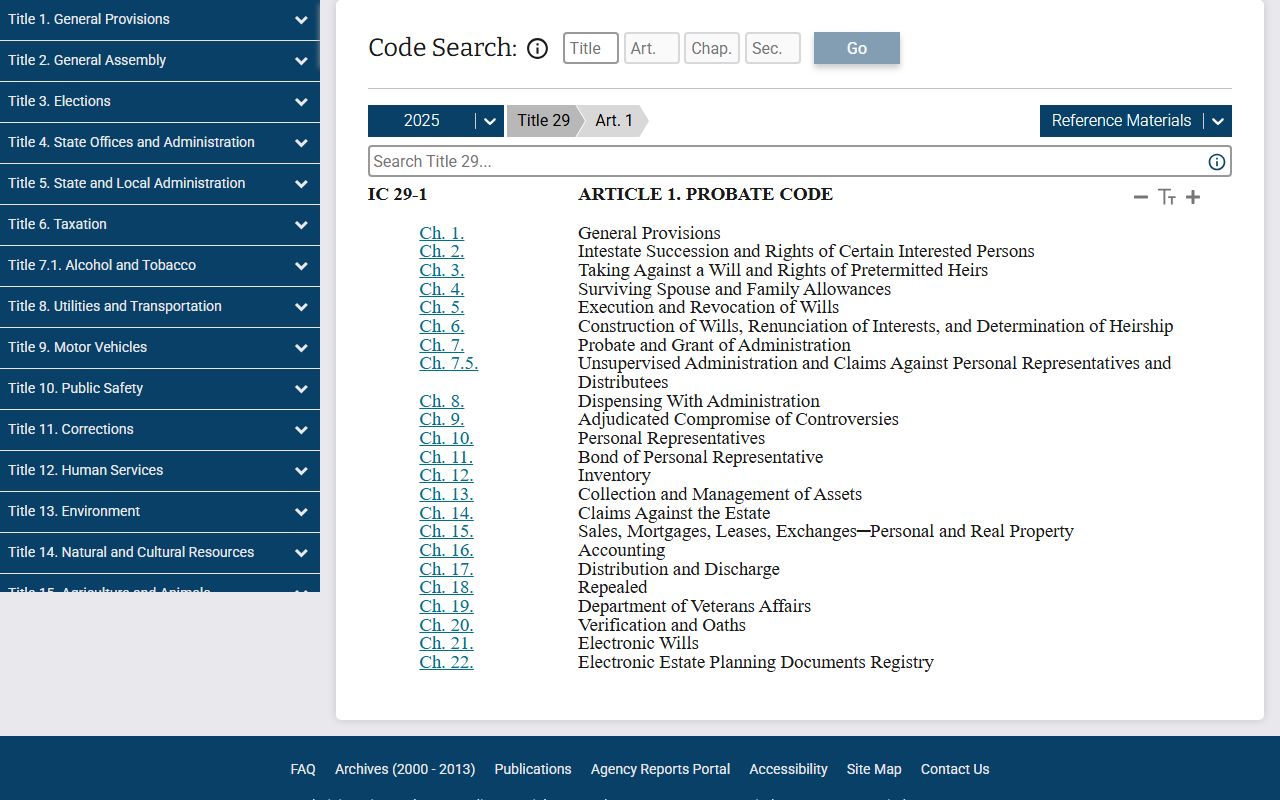
The probate code supplies the statewide legal framework, while Shelby County filings and copies are handled through the local trial courts and clerk.
Shelby County Probate Terms
Probate files use terms that can be hard to read without context. These definitions are plain-language aids for common words that may appear in Shelby County probate records. The exact legal effect depends on Indiana law and the court's order in the case.
- Testator
- The person who made a will before death.
- Executor
- The person named in a will to carry out estate duties after appointment by the court.
- Personal representative
- The person authorized to act for an estate, whether named in a will or appointed by the court.
- Intestate
- A death without a valid will controlling the estate.
- Guardianship
- A court case appointing someone to handle personal or property decisions for a minor or protected person.
- Conservatorship
- A protective arrangement for property or financial management, often tied to protected-person proceedings.
A probate docket may use several of these words in one case. For example, an estate may begin with a petition, then an order appointing a personal representative, then later docket events for inventory, creditor claims, accounting, and closing. A guardianship file may use different language because the subject is a protected person rather than a decedent's estate.
Search Shelby County Probate Records
The main online search path is Indiana MyCase. Search by decedent name, estate name, personal representative, interested party, or case number, then narrow the location to Shelby County where the controls allow it. If the case appears, read the court name carefully. It may show Shelby Circuit Court or a Shelby Superior Court rather than a separate probate court label. The court name identifies the venue for hearings and filings.
- Open Indiana MyCase and search broadly by name or case number.
- Use Shelby County or the specific Shelby court as the location filter when available.
- Check case type, filing date, party names, attorney entries, and docket events to confirm the right probate matter.
- Use CourtCal if a hearing date needs to be checked after the case is found.
- Contact the Shelby County Clerk for certified copies, older files, or documents not displayed online.
A no-result search does not prove there is no estate or guardianship. Names may be indexed differently, the case may be older, a protected-person matter may be restricted, or the user may be searching the wrong county. If an official answer is needed, the clerk's record-request channel is the fallback because the clerk can search by name or case number after advance payment where the fee applies.
Shelby County Probate Courts
Shelby County probate records route through the same courthouse and clerk system as other trial-court records. The Indiana Judicial Branch local page lists the Shelby Circuit Court and two Shelby Superior Courts. The county court pages list the same courthouse address for all three. Probate cases may be assigned within that trial-court structure under local practice and case type.
Shelby Circuit Court
Judge: R. Kent Apsley
407 South Harrison Street
Shelbyville, IN 46176
317-392-6321
8:00 a.m.-4:00 p.m. Monday-Friday
Shelby Superior Court 1
Judge: Trent Meltzer
407 South Harrison Street
Shelbyville, IN 46176
317-392-6340
8:00 a.m.-4:00 p.m. Monday-Friday
Shelby Superior Court 2
Judge: Andrew R. McNeil
407 South Harrison Street
Shelbyville, IN 46176
317-392-6340
8:00 a.m.-4:00 p.m. Monday-Friday
For copies and filing questions, the Shelby County Clerk is usually the better contact than a judge's office. The court office controls hearings and court administration, while the clerk receives filings, keeps the public court file, collects listed fees, and processes certified copies.
Shelby County Probate Fees
The Shelby County Clerk's filing-fee schedule lists the local probate-related filing category used for estates, trusts, guardianships, and miscellaneous civil matters. The clerk also publishes publication-fee instructions, which matter because estate notices may need newspaper publication under Indiana law or court order. Copy fees are separate from filing fees, so a person requesting a certified order after filing should account for both kinds of cost where applicable.
| Item | Amount |
|---|---|
| Estate, trust, guardianship, adoption, or miscellaneous civil filing | $177 |
| Plain copy from clerk records | $1 per page |
| Certified copy | $1 per document plus copy cost |
| Exemplified copy | $3 per document plus copy cost |
| Search by requested name or case number | $5 per request |
| Publication fee | Follow the clerk's publication-fee instructions |
The Shelby County Clerk publication-fee page is the local source for probate notice payment instructions. The U.S. District Court for the Southern District of Indiana is shown here only as a separate federal court reference.
This federal court source is separate from local probate, and it helps show that Shelby County estate cases stay in state trial court unless a distinct federal issue exists.
Shelby County Probate Record Fields
A public probate record may show a mix of case summary data and docket events. The public view depends on the case type, court access rules, and whether a document is available online. A probate search result should be read as a court index and event log first. It may not provide every underlying document. Certified copies, wills, appointment orders, or closing papers may need to be requested from the clerk even when the case summary is visible.
| Field | What It Shows |
|---|---|
| Case number and court | The Shelby court where the probate case is filed. |
| Case type | Estate, guardianship, trust, or miscellaneous probate category where public. |
| Filing date and status | When the case opened and whether it remains active or closed. |
| Decedent or protected person | Name shown only to the extent public access permits. |
| Petitioner or representative | Person asking for appointment or acting for the estate. |
| Docket events | Petition, notice, hearing, inventory, claim, accounting, order, and closing entries. |
| Documents and costs | Public document links and filing-cost entries where available. |
Probate records can be dense because they track both court orders and estate administration. A docket event for an inventory or accounting may signal that a filing occurred without showing all asset details online. When a user needs the actual document for title work, bank claims, genealogy, or estate administration, the clerk's copy process is the more reliable access channel.
Shelby County Probate Process
Probate workflow depends on the kind of case. A formal estate is different from a small-estate affidavit, and a guardianship is different from a trust matter. The research supports a general filing path rather than a single fixed procedure for every case. The key local point is that filing, fee payment, notices, hearings, and copy requests route through the Shelby court and clerk structure.
Probate flow: Determine case type › file petition and will if any › pay filing fee › provide required notices › attend hearing if set › obtain appointment or other order › administer claims, inventory, accounting, or trust issues › file closing papers.
Publication may be required for notices to creditors or other probate notices. The Shelby clerk's publication-fee page should be checked before assuming a notice has been paid or placed. Publication fees are not the same as filing fees, and the need for publication depends on the case and court requirements.
Restricted Shelby County Probate Records
Probate is not always fully open online. Guardianship details for minors or protected adults may be limited. Medical, financial, protected identifying, and sensitive exhibits may be redacted. Personal identifiers should not appear in ordinary public copies. A sealed order or restricted document can also block online access even when the case number and some docket entries are public.
The access rule is practical as well as legal: start with MyCase for public case information, then use the clerk for certified copies or documents not online. If the case involves a protected person, adoption, juvenile matter, or sealed material, the requester may need party status, a court order, or attorney help. The clerk can explain the request process but cannot turn confidential probate material into a public copy just because a case exists.
The U.S. Bankruptcy Court for the Southern District of Indiana is a separate federal court for bankruptcy cases, not the place to request Shelby County probate estate files.
The distinction matters when debts or estates overlap with bankruptcy, because the probate docket and bankruptcy case are searched in different systems.